Water Is Becoming the Next Infrastructure Constraint

The infrastructure conversation around AI has mostly focused on electricity, and that focus is understandable. The IEA projects that global data-center electricity consumption could more than double to around 945 TWh by 2030, with AI being one of the drivers of that increase. But as digital infrastructure expands, power is not the only physical input that will shape where capacity can be built and how reliably it can operate. Water is beginning to matter much more directly, because it sits behind the cooling systems, industrial processes and energy assets that support the next phase of AI and advanced manufacturing.
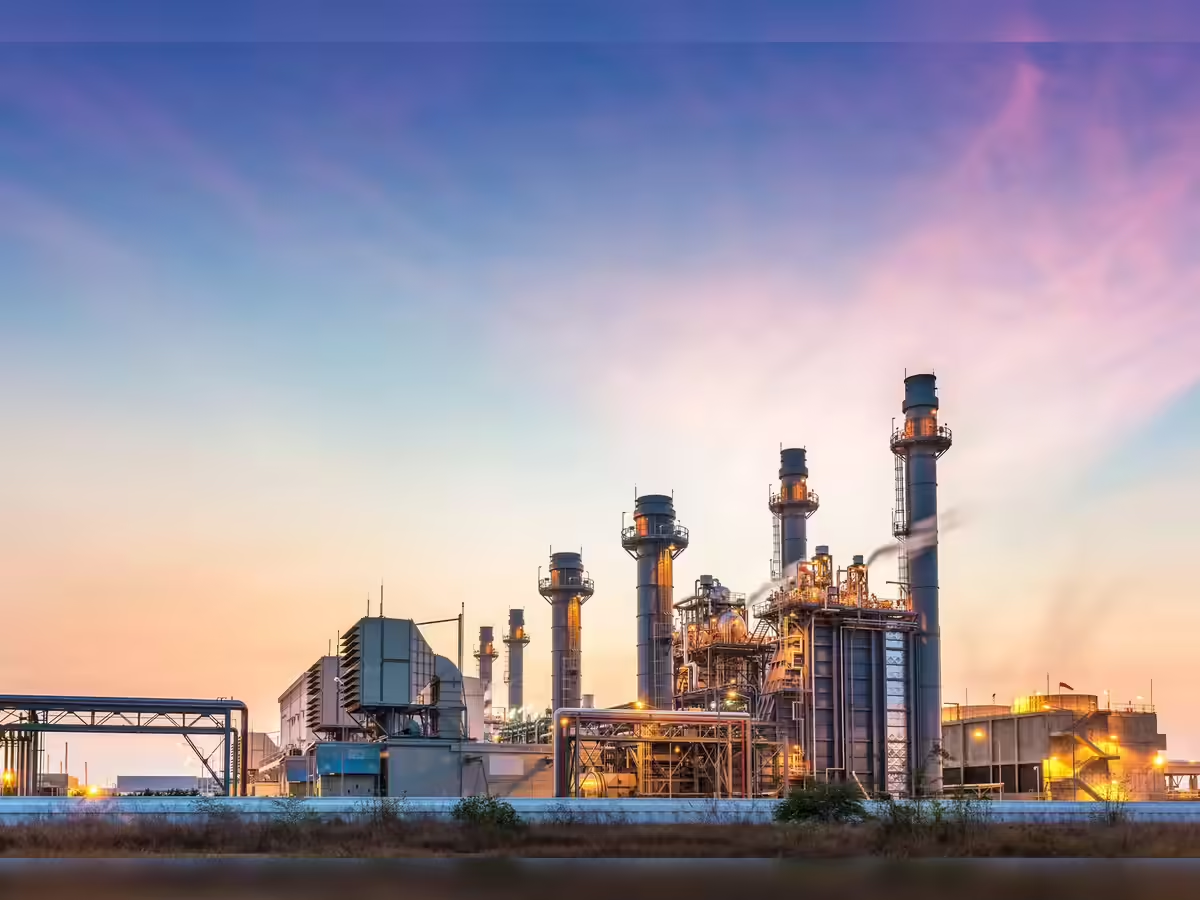
Water plays a different role in each sector, but the strategic issue is similar. Data centers need cooling systems to manage dense computing loads, nuclear plants depend on cooling water and temperature limits to maintain output, and semiconductor fabs require ultra-pure water for chip manufacturing. The common thread is that water is no longer just a sustainability metric to be disclosed after the fact. It is becoming a practical infrastructure input that can affect site selection, permitting, operating resilience and local acceptance. Reuters reported that UN researchers expect data centers’ power and water consumption to double by 2030 as AI demand grows, which shows how quickly digital infrastructure can become a local resource issue rather than only a technology story.
Data centers are the most visible example because AI workloads are increasing the density and intensity of compute infrastructure. The issue is not just total water use, but where new capacity is being located. WRI found that two-thirds of U.S. data centers built or in development since 2022 are in water-stressed areas, which means the decision to build a hyperscale facility can become sensitive in regions already managing drought risk, groundwater pressure or competing industrial demand. In those markets, a data center is not just a real-estate asset with a power connection; it becomes part of the local water equation.
Nuclear power shows a different version of the same constraint. Nuclear is increasingly relevant to the AI infrastructure debate because it can provide firm, low-carbon electricity, but its operating model is still linked to cooling-water availability and environmental temperature limits. During Europe’s recent heatwave, Reuters reported that French nuclear output fell by 4.1 GW, equal to around 7% of total power demand, after high river temperatures and limited cooling-water availability forced reductions at several reactors. The point is not that nuclear is unreliable, but that even reliable energy assets need to be planned around local climate and water conditions.
Semiconductors add another layer because chip manufacturing sits upstream of the AI boom itself. Advanced fabs require significant volumes of ultra-pure water for wafer fabrication, and the World Economic Forum has highlighted water availability and water efficiency as growing challenges for semiconductor manufacturing. This is already changing how leading chipmakers think about operations. TSMC has introduced reclaimed water into its manufacturing system and has set a target of replacing more than 60% of water resources with reclaimed water by 2030, which shows that water planning is becoming part of the operating model rather than a peripheral sustainability initiative.
The broader context makes this more than a sector-specific issue. WRI’s Aqueduct data shows that 25 countries face extremely high water stress each year, meaning they use more than 80% of their renewable water supply for irrigation, livestock, industry and domestic needs. Many of the sectors now being prioritized for national competitiveness;, AI infrastructure, semiconductors, energy and industrial reshoring are expanding in a world where water stress is already material in several regions. That makes water scarcity a commercial and infrastructure risk, not only an environmental concern.
For companies and investors, the implication is that water needs to be assessed much earlier in the infrastructure planning process. Project teams already spend significant time underwriting land, grid interconnection, power procurement, tax incentives and customer proximity. The same discipline now needs to apply to cooling design, water sourcing, wastewater reuse, reclaimed-water partnerships and long-term climate resilience. In water-stressed markets, these choices can affect project timelines, operating costs and community acceptance, which means they also affect the strength of the investment case.
This is why water should be treated as infrastructure, not as a compliance item. For data centers, that means understanding water stress before site selection is locked. For nuclear power, it means designing cooling resilience into the asset plan rather than treating heat events as temporary disruptions. For semiconductors, it means building water reuse into fab design from the beginning, because process water is central to production quality and continuity.
The next bottleneck in global infrastructure may not appear as visibly as a shortage of electricity or land. It may show up through delayed permits, constrained plant output, higher cooling costs, local resistance or the need to redesign projects around more resilient water systems. As AI, energy and advanced manufacturing scale together, water is becoming one of the hidden variables behind industrial competitiveness.